Topic 3 of 10
DHI, Sapphire, Bio-FUE: Buzzwords Decoded
There are two harvest methods and three implantation methods. Everything else on a clinic's price list is a brand name wrapped around one of them.
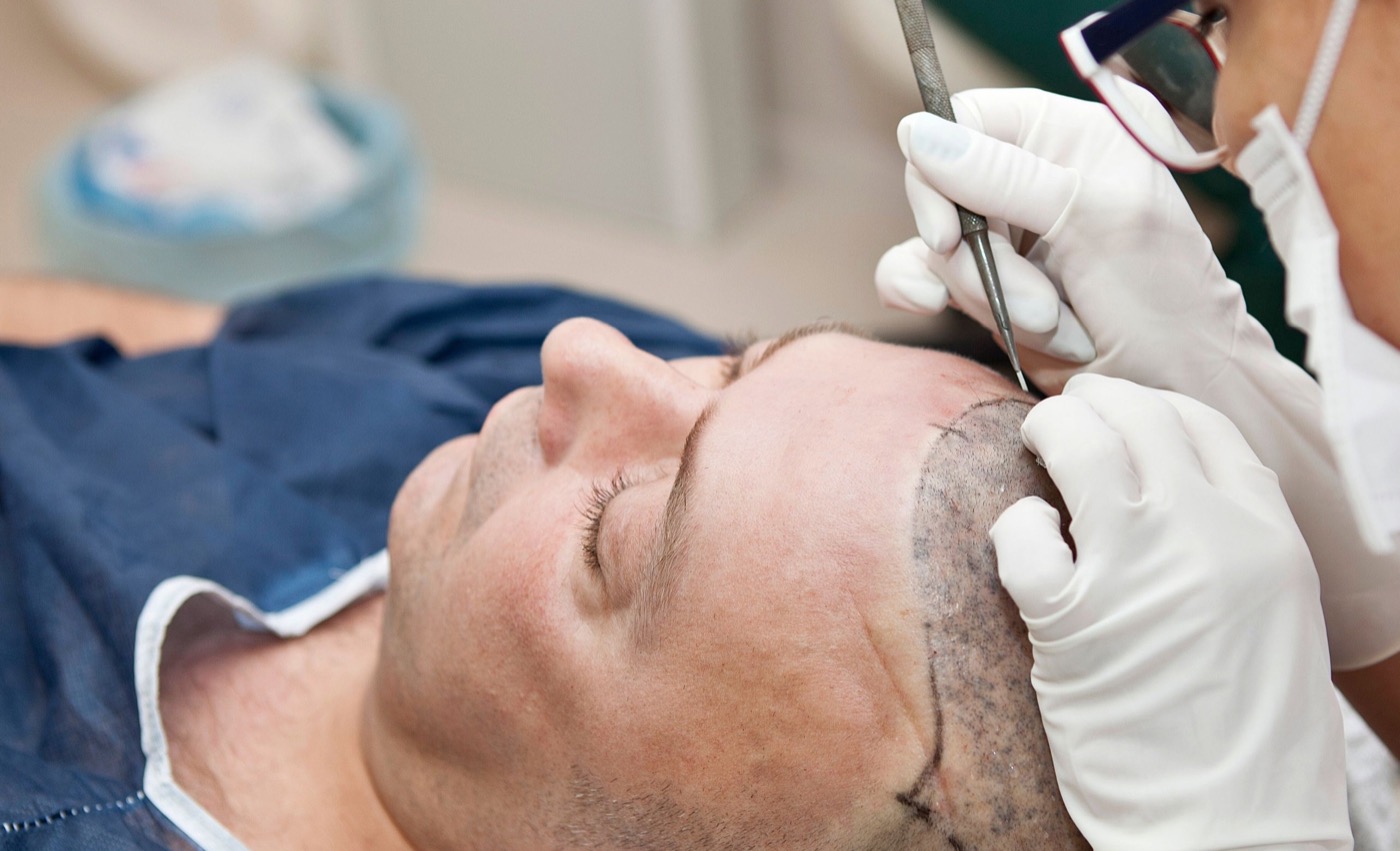
Walk into ten clinics and you'll be quoted ten different 'techniques': DHI, Sapphire FUE, Bio-FUE, Micro-FUE, Perfect Hair Transplant, Soft FUE, Organic Hair Transplant, Mega Session, HD-FUE. Almost none of these are distinct operations. They are variations of the same two procedures, trademarked for marketing.
Here's the decoder.
DHI — Direct Hair Implantation
The genuine article. DHI uses a Choi implanter pen — a hollow needle preloaded with a single graft. The technician makes the incision and delivers the follicle in one motion, rather than the standard two-step approach of creating all the recipient sites first, then placing grafts into them.
What it genuinely offers
- Less handling of the graft. The follicle is loaded once and released once, reducing crush and trauma to the bulb.
- Shorter time out of the body, in principle, since the site and the placement happen together.
- Precise angle and depth control, useful for dense frontal work and for placing single hairs in the hairline.
- No pre-made sites sitting open, which some surgeons argue reduces bleeding and popping of adjacent grafts.
- Can be done without shaving the recipient area, which appeals to patients who can't take visible downtime.
What it costs you
- Slower. Loading pens one graft at a time takes longer, which is why very large sessions are less often done fully by DHI.
- More expensive — commonly 20–50% above standard FUE at the same clinic.
- Highly technician-dependent. A pen in unskilled hands damages grafts as readily as forceps do.
- No strong evidence of better final density in head-to-head comparisons versus well-executed conventional placement.
Sapphire FUE
Standard FUE creates recipient sites with steel blades. Sapphire FUE uses blades made from synthetic sapphire crystal instead. That is the entire difference — the harvesting punch, the grafts and the surgeon's plan are unchanged.
The claimed advantages are real but modest: sapphire holds a sharper edge, so incisions are smoother and marginally smaller, which may reduce tissue trauma, crusting and healing time. It also allows slightly tighter packing. Independent evidence for a better final cosmetic result is thin. If a clinic charges a large premium for it, you're paying mostly for the word.
The rest of the glossary
| Term you'll be quoted | What it actually is |
|---|---|
| Bio-FUE / Organic / Stem-Cell Enriched | Standard FUE plus PRP (platelet-rich plasma) injected at the same time. PRP has moderate evidence for supporting existing hair; it does not change the transplant itself. |
| Micro-FUE / HD-FUE / Ultra-Refined | Standard FUE with a small punch (usually 0.7–0.8 mm). Good practice, not a separate technique. |
| Soft / Painless FUE | Standard FUE with better anaesthesia technique — often a needle-free jet injector for the first numbing. Nice to have; not a different operation. |
| Unshaven / U-FUE / Long-hair FUE | FUE performed without shaving the head, harvesting from between existing hairs. Genuinely useful for discretion, but slower, more expensive and limited to smaller graft counts. |
| Mega / Giga session | A very large single session (3,500–5,000+ grafts). A scheduling decision, not a technique — and one that raises questions about graft time out of body and technician fatigue. |
| Robotic / ARTAS | Image-guided motorised FUE punching. Assists the harvest; changes nothing downstream. |
| Trademarked clinic names | Marketing. Ask which of the two harvest methods and which implantation method it uses, and the answer will always be one of the above. |
The three implantation methods that do exist
- Forceps into pre-made sites. The classic approach. Sites are made first with blades or needles; grafts are placed with fine forceps. In experienced hands, still the benchmark.
- Implanter pens (DHI). Site creation and placement in one motion, as described above.
- Stick-and-place. A hybrid — the site is made and a graft placed into it immediately with forceps, one at a time, without a pen.
The questions that actually predict your result
Skip the technique name and ask these instead. The answers separate serious clinics from sales operations.
- Who performs the extraction and the implantation — the surgeon, or technicians? Technicians doing most of the work is normal and legal in many countries, but you should know, and the surgeon should be present throughout.
- How many grafts per hour, and how long will my grafts be out of my body? Follicle survival declines with time outside the scalp; good clinics keep it short and store grafts in chilled holding solution.
- What holding solution do you use? Saline is the cheap default; HypoThermosol, Custodiol or similar preservation solutions are better.
- How many patients does the clinic operate on per day? Six or eight simultaneous patients means a shared, rushed technician team.
- Can I see 12-month photos of patients with my Norwood stage and hair type, shot in the same lighting, wet and dry?
- What is the plan for the next ten years, as my loss progresses?
Key takeaways
- DHI is a real implantation method using an implanter pen — but it is still FUE harvesting underneath, and it costs more.
- Sapphire FUE means sapphire-crystal blades for recipient sites. Marginal benefit; often a large price premium.
- Bio-FUE, Organic, Micro-FUE, Soft FUE and most trademarked names are standard FUE with an add-on or a better marketing team.
- Ask about graft time out of body, holding solution, who does the work, and patients per day — those predict results.
- A clinic with a written touch-up policy is telling you something a brochure can't.
All ten topics
- 1. Why Hair Actually Falls Out
- 2. FUE vs FUT: The Only Real Choice
- 3. DHI, Sapphire, Bio-FUE: Buzzwords Decoded (you are here)
- 4. Are You Actually a Good Candidate?
- 5. How Many Grafts Do You Actually Need?
- 6. The 18-Month Timeline, Month by Month
- 7. Hairline Design: Where Results Are Won or Lost
- 8. Medication vs Surgery — Why You Need Both
- 9. Cost, Clinics and Hair Transplant Tourism
- 10. Risks, Complications and Real Recovery