Topic 9 of 10
Cost, Clinics and Hair Transplant Tourism
Turkey performs an enormous share of the world's hair transplants. Some of the best surgeons in the field work there. So do some of the worst.
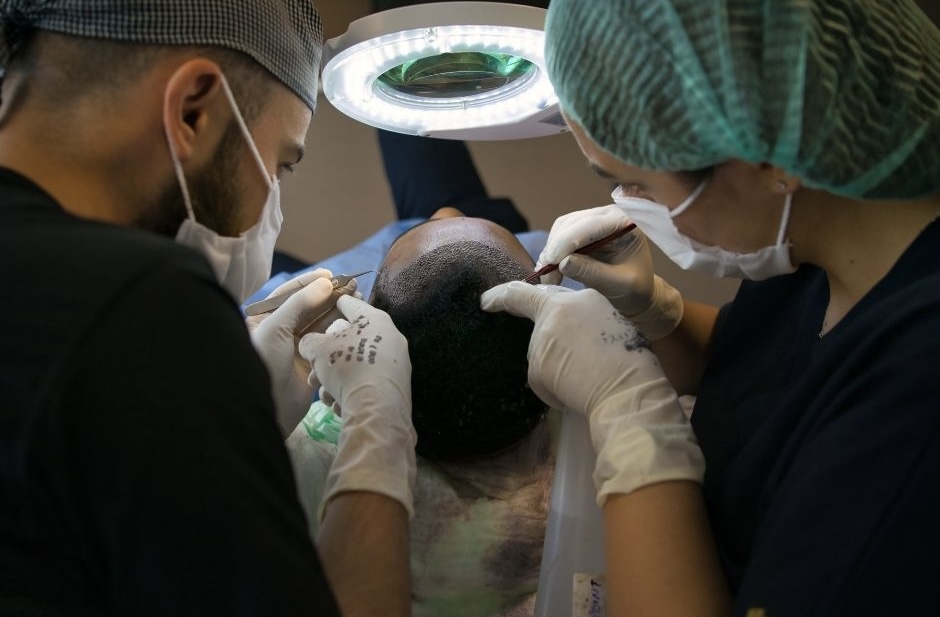
Hair transplantation has the widest price variation of any common cosmetic procedure. The same 3,000-graft operation can cost $1,800 in Istanbul, $9,000 in London and $22,000 in Beverly Hills. The variation is not primarily about quality — but it is not unrelated to it either.
Typical pricing by market
| Region | Per graft | 3,000 grafts | Usual model |
|---|---|---|---|
| Turkey | $0.60–$2.50 | $1,800–$7,500 | Mostly all-inclusive packages |
| India / Thailand | $0.50–$2.00 | $1,500–$6,000 | Per graft or package |
| Mexico / Colombia | $1.00–$3.00 | $3,000–$9,000 | Per graft |
| Spain / Poland / Hungary | $1.50–$4.00 | $4,500–$12,000 | Per graft |
| UK | $3.00–$7.00 | $9,000–$21,000 | Per graft or session |
| USA / Canada / Australia | $3.00–$9.00 | $9,000–$27,000 | Per graft or session |
Prices are indicative and move; treat them as orders of magnitude, not quotes. Note that top-tier surgeons in Turkey often charge $4,000–$9,000 — closer to Western pricing than to the package market, because they operate on one or two patients a day rather than eight.
What the price is actually buying
- Surgeon time. The decisive variable. A surgeon doing one patient a day cannot charge what a clinic processing eight does.
- Who does the work. In the package market, technicians frequently perform both extraction and implantation, with the surgeon present intermittently. This is legal in many jurisdictions and can be done well by an experienced stable team — but you should know it, and it is a large part of the price difference.
- Technician team quality and continuity. Graft survival depends on handling. Experienced, stable teams cost more than rotating ones.
- Holding solution and graft protocol. Saline versus a proper preservation solution changes survival.
- Local cost base. Real and legitimate — staff, premises and insurance simply cost less in some countries.
- Marketing spend. Also real. Some Western pricing reflects rent on a Harley Street address more than surgical skill.
The hidden costs of a cheap package
Compare total cost, not headline price. Package quotes routinely exclude:
- Flights and time off work — typically 4–6 days abroad, plus 7–10 days of visible healing at home.
- Extra grafts beyond the package limit, charged at a higher rate on the day.
- Post-op medication and PRP, often presented as essential add-ons after you've arrived.
- Follow-up care, which is by WhatsApp if it exists at all.
- Complication management. An infection at home is your own healthcare system's problem, at your cost.
- Repair surgery — the big one. Fixing a bad transplant costs far more than doing it right, and some damage (over-harvested donor, scarring, wrongly angled hairline) cannot be fully repaired at any price.
Red flags
In the sales process
- A quote before anyone has examined your scalp. Graft counts from a phone photo are guesses.
- Pressure and expiry dates. "This price is only valid this week." Medicine doesn't have flash sales.
- You never speak to the surgeon before the day of surgery. A salesperson answering clinical questions is the single most common feature of bad outcomes.
- Guaranteed results, guaranteed graft survival, guaranteed density. Nobody can guarantee biology.
- 'Unlimited grafts' — an invitation to over-harvest your donor area.
- Before/after photos with different lighting, angles, hairstyles or wet/dry states.
- Reviews that are uniformly five-star, recent and short.
About the clinic
- The surgeon's name, qualification and registration number aren't published, or aren't findable in the national medical register.
- No membership of a recognised body — ISHRS, ABHRS, or the national dermatology/plastic surgery board.
- The clinic won't say how many patients they operate on per day.
- The 'hospital' is a hotel room, or the operation is done somewhere different from the consultation.
- No written informed consent covering risks, or consent presented in a language you can't read.
- No stated policy for revision if the result falls short.
How to vet a clinic properly
- Verify the surgeon individually, not the clinic brand. Get a name; check the national medical register; confirm the qualification is in surgery or dermatology, not a weekend certificate.
- Check ISHRS membership (ishrs.org) — not a guarantee, but a meaningful filter.
- Insist on a video consultation with the operating surgeon before paying anything.
- Ask for 12-month results from patients with your Norwood stage, hair colour and hair type, photographed in consistent conditions, including wet hair and a top-down view of the donor area.
- Read the negative reviews specifically, and look at independent forums rather than the clinic's own testimonials.
- Get the plan in writing: graft count as follicular units, zones treated, technique, who performs each stage, what happens if you need more grafts, revision policy.
- Ask what happens if there's a complication after you fly home, and who pays.
- Consult two or three clinics. Compare graft estimates — a large discrepancy tells you something about at least one of them.
Financing, and a note on urgency
Clinics increasingly offer payment plans. Elective surgery financed at high interest, on a decision made under sales pressure, is a bad combination. Hair loss is not an emergency — it advances over years. Any pressure to decide quickly is generated by the seller, not by your scalp.
If money is tight, the best-value sequence is almost always: medication first (cheap, effective, preserves what you have), save, and then have one properly planned procedure with a surgeon you have verified — rather than a cheap one now and a repair later.
Key takeaways
- The same procedure ranges from about $1,800 to $27,000. Volume and surgeon involvement explain most of the gap.
- Cheap packages typically mean technician-performed surgery at high patient volume — wider variance, less recourse.
- Compare total cost including travel, extra grafts, add-ons, lost work and the possibility of repair surgery.
- Verify the individual surgeon in a medical register, and insist on a video consult with them before paying.
- Guaranteed results, unlimited grafts and expiring discounts are sales tactics, not medicine.
All ten topics
- 1. Why Hair Actually Falls Out
- 2. FUE vs FUT: The Only Real Choice
- 3. DHI, Sapphire, Bio-FUE: Buzzwords Decoded
- 4. Are You Actually a Good Candidate?
- 5. How Many Grafts Do You Actually Need?
- 6. The 18-Month Timeline, Month by Month
- 7. Hairline Design: Where Results Are Won or Lost
- 8. Medication vs Surgery — Why You Need Both
- 9. Cost, Clinics and Hair Transplant Tourism (you are here)
- 10. Risks, Complications and Real Recovery