Understand hair loss before you choose a treatment.
Hair transplants are permanent, expensive and built on a supply of donor hair you can never replace. These ten explainers cover the biology, the techniques, the arithmetic and the risks — so the decision you make is an informed one.
- Evidence-basedClear, factual information
- IndependentNo clinic bias
- For everyonePatients, students & professionals
Index
The ten topics
Read in order for a complete picture, or jump straight to what you need. Each one takes 7–10 minutes and ends with key takeaways.
Why Hair Actually Falls Out
DHT, genetics and the Norwood scale — the biology behind male and female pattern baldness, explained without jargon.
FUE vs FUT: The Only Real Choice
Strip surgery or individual extraction? The honest trade-offs in scarring, graft yield, cost and recovery.
DHI, Sapphire, Bio-FUE: Buzzwords Decoded
Clinics invent trademarks to look advanced. Here's what each term actually means — and which ones change your result.
Are You Actually a Good Candidate?
Donor supply, age, loss stability and expectations — the four filters that decide whether surgery will help or hurt.
How Many Grafts Do You Actually Need?
The arithmetic behind graft counts — by zone, by Norwood stage, and how clinics inflate the number.
The 18-Month Timeline, Month by Month
Shock loss, the ugly duckling phase, and why month 3 makes people panic. What actually happens, and when.
Hairline Design: Where Results Are Won or Lost
Why age-appropriate beats low, how single-hair grafts create a soft edge, and how to spot a bad plan before surgery.
Medication vs Surgery — Why You Need Both
Finasteride, minoxidil and the evidence behind them, plus why a transplant alone leaves you chasing your own hairline.
Cost, Clinics and Hair Transplant Tourism
Why the same procedure costs $2,000 or $20,000, what the cheap packages leave out, and the red flags that predict a bad result.
Risks, Complications and Real Recovery
Infection, necrosis, over-harvesting, unnatural results — what can go wrong, how likely it is, and how to avoid it.
Inside the operating room
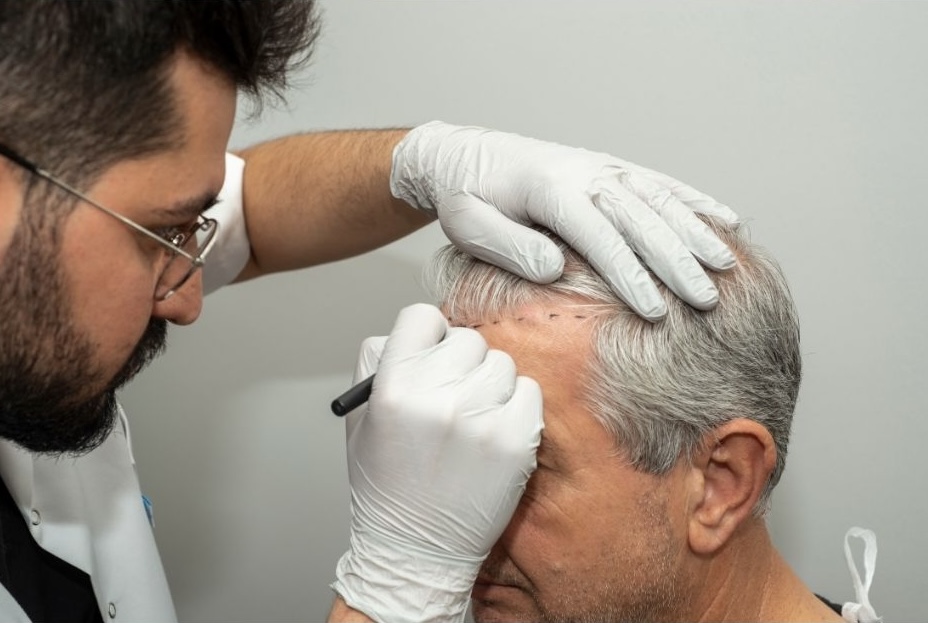
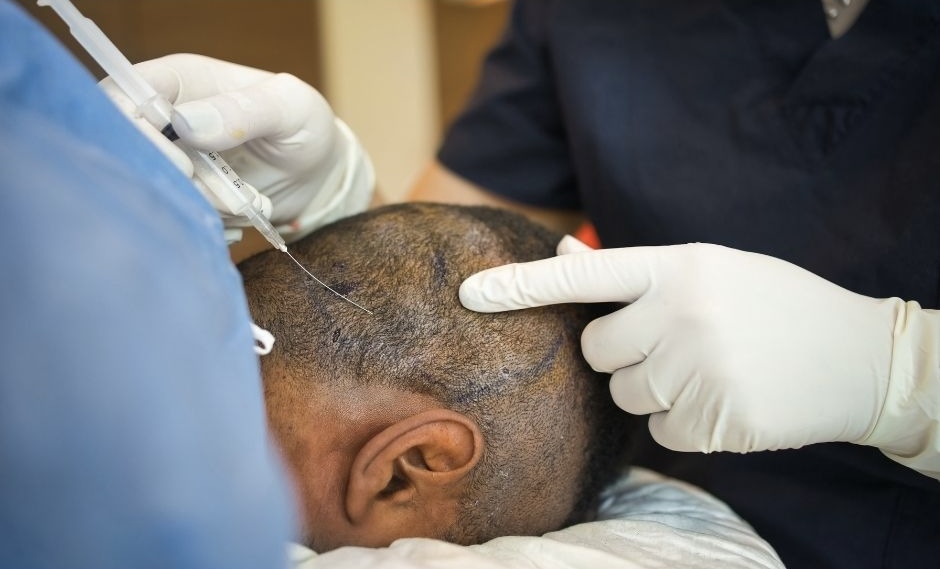
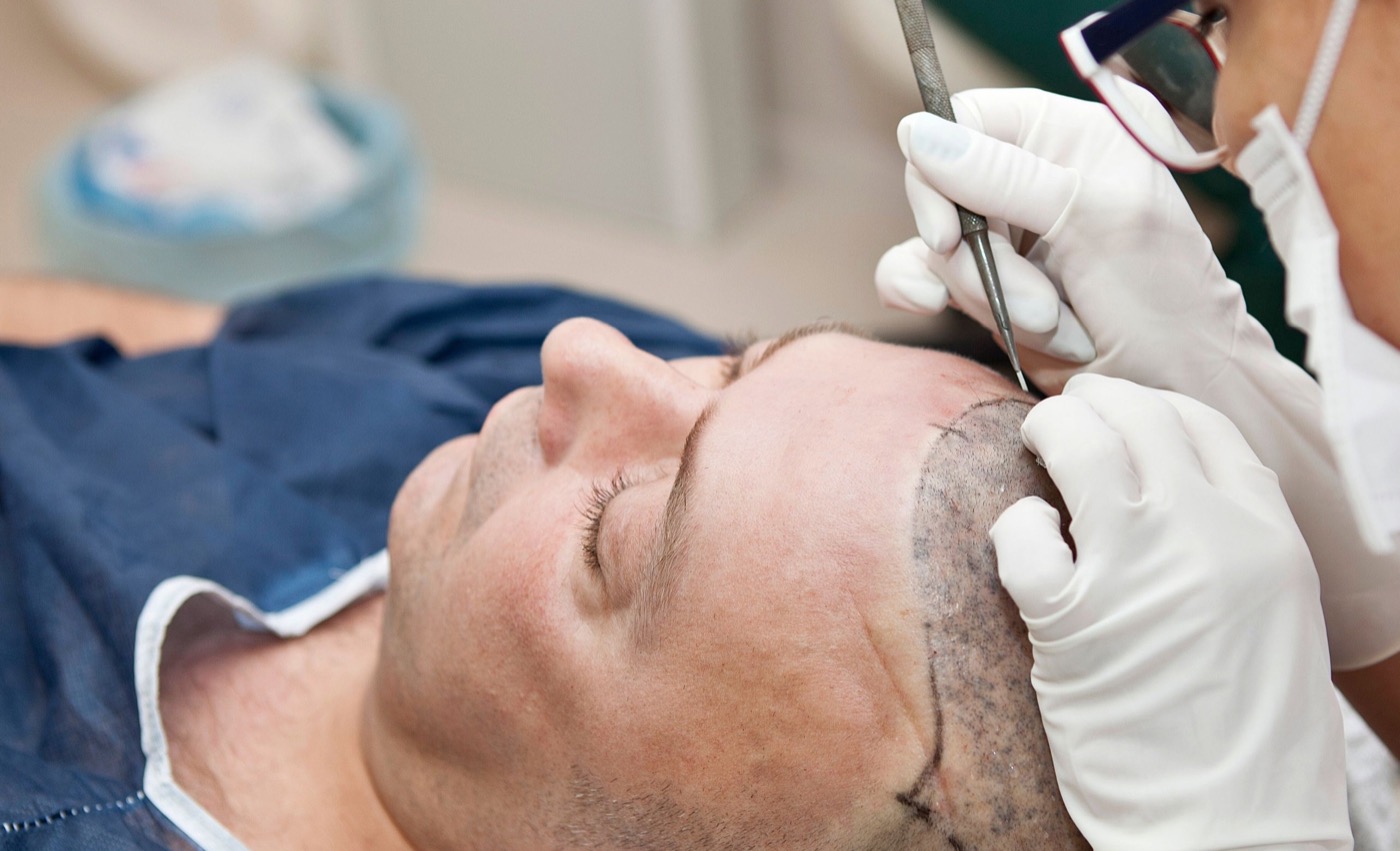
What a transplant day actually looks like
Eight to ten hours in a chair, almost all of it done awake under local anaesthetic. Three stages of the day, in the order they happen.
Start here
If you only do five things
The order matters more than most people realise. Getting it wrong costs donor hair you cannot get back.
The sequence that protects your options
- Get a real diagnosis. Trichoscopy plus bloods for thyroid, ferritin and vitamin D. Not every shed is pattern loss.
- Stabilise medically first. Give proven therapy 12 months and photograph monthly in fixed lighting.
- Wait for the pattern to declare itself if you are under 25. Your final Norwood stage isn't knowable yet.
- Operate only on areas that are genuinely bare, once loss is stable.
- Stay on medication afterwards. Grafts are permanent; the hair behind them is not.
Six questions that separate clinics
- Who performs the extraction and implantation — the surgeon, or technicians?
- How many patients does the clinic operate on the day of my surgery?
- How long will my grafts be outside my body, and in what holding solution?
- Can I see 12-month photos of patients with my Norwood stage and hair type?
- What is the plan for the next ten years as my loss progresses?
- What is your written policy if the result falls short?
FAQ
Frequently asked questions
Short answers to the questions that come up first. Each links to a topic that covers it properly.
Do hair transplants actually work?
Yes, and the reason is biological rather than cosmetic. Follicles from the back and sides of the head are genetically resistant to DHT, the hormone that drives pattern baldness. Moved to a bald area, they keep that resistance and grow for life. This is called donor dominance and it has been the basis of the operation since the 1950s.
The realistic caveat: a transplant redistributes a finite supply of hair rather than creating more. It restores the appearance of fullness, not the density you had at eighteen.
How permanent is a hair transplant?
The transplanted follicles are permanent — they do not become sensitive to DHT after being moved. What is not permanent is the native hair around them, which keeps receding unless treated. That is why medical therapy alongside surgery matters so much.
How much does it hurt?
The local anaesthetic injections at the start are the genuinely uncomfortable part, and last a few minutes. After that most patients report pressure and time-passing boredom rather than pain. Post-operative discomfort is mild after FUE and moderate after FUT, where a tight, numb sensation across the back of the head is common for weeks.
When will I see results?
Transplanted hair sheds at weeks 2–6, new growth starts around month 4, and you'll see roughly half the result at 6 months, 80–90% at 12 months and the final outcome at 12–18 months. Crown work and coarse or curly hair take the longest.
Am I too young?
If you are under 25 with progressing loss, most responsible surgeons will advise waiting and starting medical therapy first. The problem is that your final pattern isn't knowable yet — surgery treats today's scalp while genetics keeps working on the rest, and donor hair spent at 22 isn't available at 45.
What does it cost?
Roughly $1,800–$7,500 in Turkey, $9,000–$21,000 in the UK, and $9,000–$27,000 in the US and Australia for around 3,000 grafts. Most of the difference reflects surgeon involvement and patient volume rather than the equipment used.
Will people be able to tell?
Not if the design is good. Detectable transplants are almost always the result of a hairline placed too low or too straight, multi-hair grafts at the front edge, or wrong hair angles — design errors, not technical ones. Immediately after surgery it is visible for 7–14 days.
Can women have hair transplants?
Yes, but selection matters more. Female pattern loss is typically diffuse and often affects the donor area too, which can rule out surgery. Women are also more likely to have a treatable underlying cause — thyroid disorder, iron deficiency, hormonal conditions — so a full medical workup should come first. Women with a stable donor area, traction alopecia, or a hairline-specific concern can do very well.
Do I have to take finasteride to get a transplant?
Not necessarily, but declining it changes the plan: a more conservative hairline, more donor hair kept in reserve, and a clear expectation of further sessions as loss advances. Some surgeons decline to operate on younger patients who won't take any medical therapy, because the outcome is predictable.
What if I don't want surgery at all?
Reasonable options exist. Medical therapy alone stabilises loss for most men. Scalp micropigmentation gives a convincing shaved-head look or adds apparent density with no drugs required. Modern hair systems have improved considerably. And a deliberate buzz cut or shaved head, worn with confidence, looks better than a poorly planned transplant — at a cost of nothing.